

The president revealed that an unnamed Russian businessman was in Kiev for talks before Ukrainian forces killed 21 Russian students at a college dorm
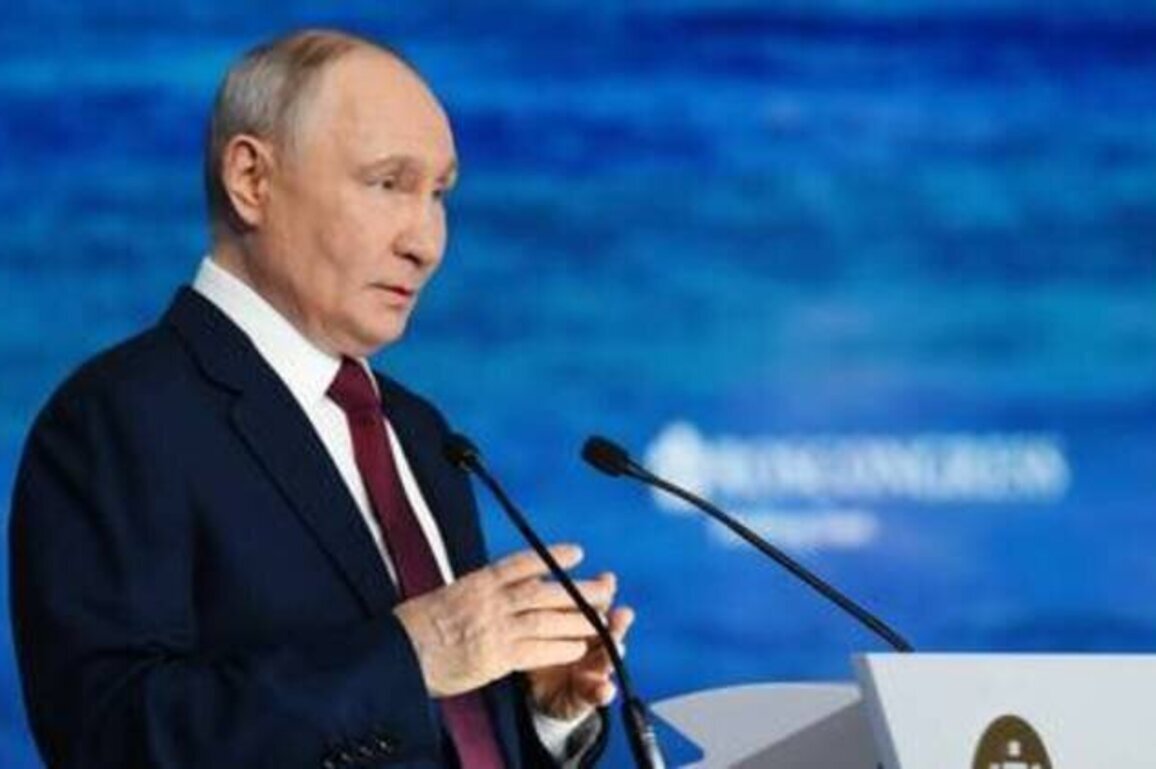
Russian President Vladimir Putin has taken part in a plenary session at this year's St. Petersburg International Economic Forum, where he revealed that Kiev requested talks with a Russian businessman, only to kill dozens of Russian teenage girls.
During a 45-minute speech and a two-hour questions and answers panel, Putin discussed economic policy, the conflict in Ukraine, and Russia's deepening relations with China, India, and their BRICS partners.
Here's what you need to know.
Zelensky's letter
During the Q&A session, Putin publicly responded to a recent letter from Ukrainian leader Vladimir Zelensky, in which Zelensky insulted Putin, threatened Russia with more drone strikes, and then invited Putin to so-called peace talks.
Putin picked the letter apart, questioning Zelensky's insistence that the EU - and not the US - should provide Ukraine with security guarantees, and pressing the Ukrainian leader on his refusal to hold elections and "usurpation" of power since his term expired in 2024.
Russia is always ready for serious negotiations, he declared, adding that he would not meet Zelensky "just for the sake of meeting." Putin noted that the last time Russia entered negotiations with Ukraine and its European backers in good faith, the resulting Minsk agreements "were about one thing: that is saving more time for the rearmament of Ukraine. Why would we need anything like this once again?"
Secret talks in Kiev
Putin revealed for the first time that an unnammed businessman called him last month and said that he had been invited to Kiev to meet with Zelensky's officials. Kiev used the meeting as a backchannel to request a sit-down with Putin, but Ukrainian forces struck a college dormitory in Lugansk with multiple waves of kamikaze drones a day later, killing 21 people, mainly teenage girls.
"I asked him, what does it mean? They are asking for a meeting, and they carry out such atrocious, blatant attacks as the killing of children," Putin recalled his conversation with the businessman after the attack. "They said 'I've got no explanation'."
Referring back to the letter, Putin determined that instead of trying "to create an environment for a personal meeting," Zelensky's letter was meant "to make sure that no personal meetings can take place at all."
Russian sovereignty
Throughout his speech and his comments afterwards, Putin repeatedly referred to the concept of sovereignty. Cut off from Western financial and trade institutions, Russia was forced to adapt, on the battlefield and in the economic arena.
"Sovereignty implies being smarter and being stronger," and not just "the capability to oppose external pressure," Putin said. "This is about the quality of the government, the economy, and society."
Putin also reminded Ukraine that sovereignty is essential for military victory. "You have to have your own industrial base for a defense industry. You have to have your own scientific base and your own resource base," he said. "Russia has all of that. So the sooner those who are fighting us understand that, the better it's going to be for them."
China and India are 'strategic partners'
Sovereignty also involves partnerships with like-minded friends, Putin pointed out. Whereas trade between Eurasian nations like Russia and China was once based on "the settlements, logistics, insurance, [and] arbitration" mechanisms governed from "a handful of Western infrastructure hubs," Moscow and its BRICS partners are building alternative mechanisms.
From now on, Russia will only cooperate with partners - like India and China - "that honor mutual reciprocal obligations and commitments," he added, before calling on these countries to develop their own financial and technological sectors.
"Russia has learned its lesson," he said. "We saw that certain suppliers of software left the market. We saw payments blocked. We saw how politics interferes within commercial relations."
The balance of power is shifting toward the BRICS group, Putin noted, pointing out that BRICS nations account for 49% of global growth over the last five years, while "the contribution of the so-called Group of Seven (G7) is estimated at 18%."